


Starting December 2024, China has stopped issuing the Working Permit Card to all expats, but instead mandated a Social Insurance Card (or “Social Security Card”) for a consolidated purpose. The intention is really to simplify the administrative process by combining paperwork. As a consequence, every foreign expat legally employed in China will now hold a Social Insurance Card, meaning that they will all be mandatorily registered in China’s social insurance system.
While the Social Insurance Card will be the only carry-card for foreign workers in China, it furthermore implied more significant obligations to pay for China’s social insurance. The following article will share with you the basic know-hows of Chinese social insurance system and what it means for expats.
What is Chinese Social Insurance?
Chinese social insurance is a government-mandated system designed to provide basic welfare benefits to all citizens. It includes five key elements:
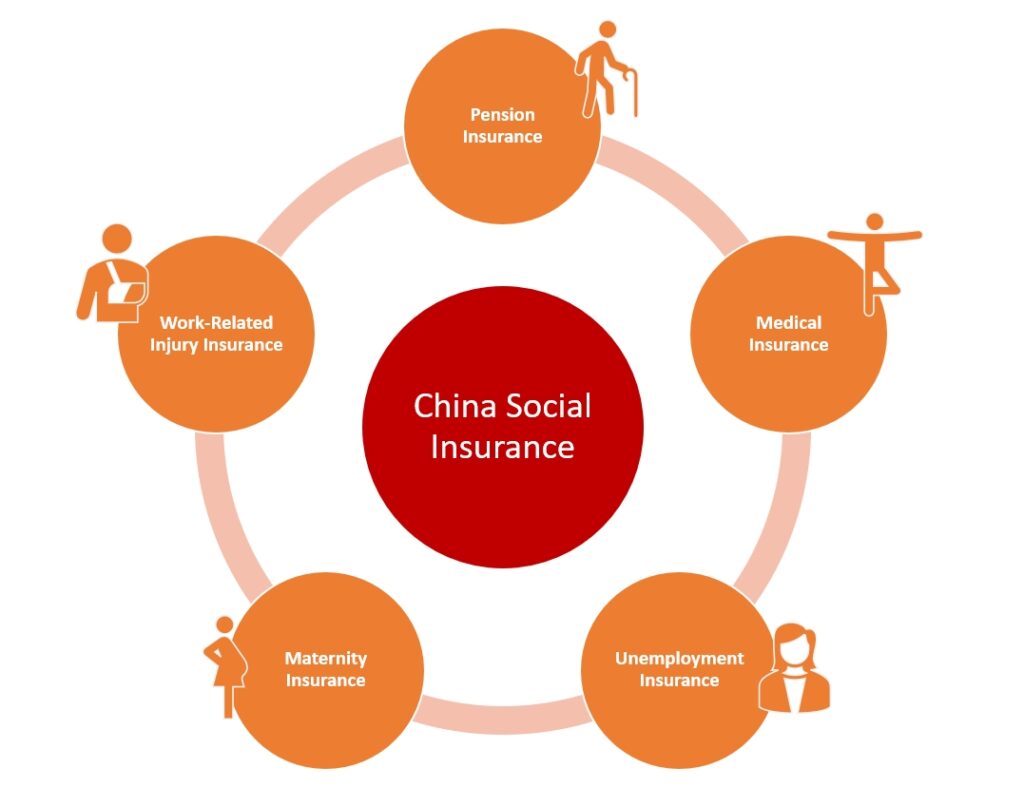
- Pension Insurance: Monthly contributions by employers and employees accumulate in a personal account, providing post-retirement income.
- Medical Insurance: Reduces medical expenses for outpatient visits, hospitalizations, and prescriptions at public healthcare facilities.
- Unemployment Insurance: Provides financial support during joblessness.
- Maternity Insurance: Covers childbirth-related medical costs and provides financial support during maternity leave.
- Work-Related Injury Insurance: Offers compensation for workplace injuries or occupational diseases.
While the Chinese social insurance system could be as complicated as that of any other country, some quick facts about the system below could get our readers quickly familiar with it:
- Who to pay: Payments into social insurance are split between employers and employees. Usually, employers’ part is higher than that of the employees.
- Which to calculate: Amounts are calculated based on salary – the higher the salary, the higher the payment.
- How much to pay: Usually there is a set of ratios set for individuals and employers separately. The ratios may vary across cities and provinces, with more economically developed regions typically having higher ratios. Eg. Beijing and Shanghai will have higher ratios than Gansu and Hebei.
What Social Insurance Means for Expats in China?
With the above background knowledge in mind, let’s go back to the question how Chinese social insurance system works for expats who are foreign citizens.
- Mandatory participation: Under the newly enforced rule, foreigners under legal employment in China are required to join the social insurance system. This applies regardless of the type of employer.
- Equal benefits: Expats could gain access to the same benefits as Chinese citizens, including medical reimbursements, maternity subsidies, and pension accruals.
- Individual ownership and consistency: Social insurance balance is carried by each expat individual. This means the individual’s balance remains intact and accumulated as expats switch jobs during the stay (just remember that not all payments go into the individual account as balance, because part of it will go to a common pool as collective fund).
- Exemptions for a certain group: Since China has signed bilateral social security agreements with a number of countries, some expats from the following countries are able to be exempted from certain social insurance categories for a specific period: Germany, South Korea, Denmark, Canada, Finland, Switzerland, the Netherlands, Spain, Luxembourg, Japan, and Serbia.
Our Suggestions For You
1. Confirm registration with your employer: Make sure that the employer registers you for social insurance within 30 days of your employment start date.
2. Understand your salary terms: Social insurance payments will reduce your take-home pay. Expats should negotiate salary with this in mind during contract discussions.
3. Plan your exit: When expats decide to leave China, they are legally allowed to withdraw the entire social insurance balance in the individuals’ accounts. However, you need to note that this process could take up to months, and the funds will be returned to the employer’s account first (whichever last employer you work for before leaving China). If you work for a decent amount of time in China, it will be a big amount of money that you prefer not to lose. Make sure to make arrangements so you can get your own money back.
However, for those who has already paid for many years and plan to be back to China in near future, they may choose to keep the money in your social insurance account. People who paid your social securities in China for accumulated 15 years, they will be eligible to receive retirement benefits from China.
The bottom line:
Social insurance has never been an “option” but a legal obligation for everyone in China. The new system is China’s another significant step to extend this obligation enforcement to the expats group in China.
We suggest that all expat individuals get familiar with these policies and be more mindful of benefits starting from compensation package negotiation. Do not trust your employer entirely on this – we have seen many cases where the employers lack knowledge of these policies, and eventually got into a messy situation together with the expats they hired.
We are here to help if you have any further questions on Chinese social insurance for expats. Contact [email protected] for a quick consultation.